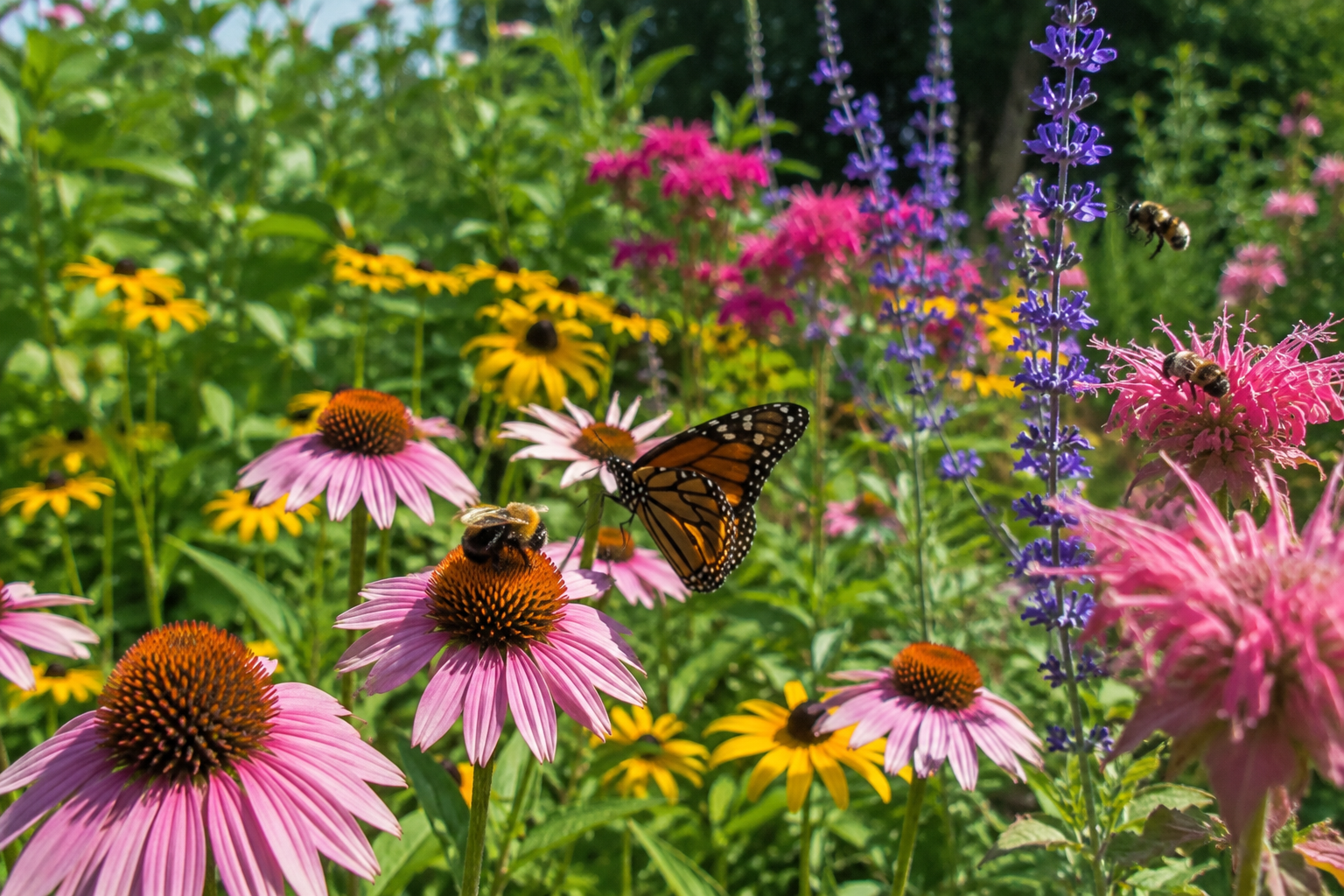
Walk through a thriving summer garden and you’ll quickly notice that the flowers aren’t the only things bringing it to life. Bees move from bloom to bloom collecting pollen, butterflies drift through colourful borders, and hummingbirds dart among bright flowers searching for nectar. These pollinators play a vital role in our environment, and your garden can provide an important source of food and habitat during the growing season.
The best part? Creating a pollinator-friendly garden is easier than many gardeners think.
Why Pollinators Matter
Pollinators are responsible for helping many plants produce seeds, fruits, and vegetables. Without them, many of the flowers, fruits, and crops we enjoy would struggle to reproduce.
In addition to supporting food production, pollinators contribute to healthier ecosystems by helping native plants thrive. By creating spaces that support bees, butterflies, hummingbirds, and other beneficial insects, gardeners can make a meaningful contribution to local biodiversity.
Choose Plants That Pollinators Love
The foundation of every pollinator garden is a diverse selection of flowering plants. The goal is to provide a continuous source of nectar and pollen throughout the growing season.
Mid-summer is one of the busiest times for pollinators, making it the perfect opportunity to add plants that are currently in bloom. Some of our favourite pollinator-friendly plants include:
- Echinacea (Coneflower)
- Monarda (Bee Balm)
- Veronica
- Salvia
- Rudbeckia (Black-Eyed Susan)
- Delphinium
- Astilbe
- Hydrangea
- Coreopsis
- Yarrow
By planting a variety of flower shapes, colours, and bloom times, you’ll attract a wider range of pollinators and create a garden that remains active from spring through fall.
Plant in Groups for Maximum Impact
Pollinators are more likely to visit large clusters of flowers than single plants scattered throughout the garden.
Planting several of the same variety together creates a stronger visual signal and allows pollinators to forage more efficiently. Large drifts of echinacea, salvia, or rudbeckia not only look beautiful but also become magnets for bees and butterflies.
This approach creates a more natural appearance while providing greater ecological benefits.
Don’t Forget the Hummingbirds
Hummingbirds are among the most exciting visitors to any garden. Their incredible speed and vibrant colours make them a favourite among gardeners of all ages.
Flowers with tubular blooms are especially attractive to hummingbirds. Plants such as bee balm, salvia, fuchsia, and certain annuals provide an excellent source of nectar throughout the summer months.
Adding a hummingbird feeder can supplement natural food sources and increase your chances of regular visits.
Provide Water and Shelter
Food is only one piece of the puzzle. Pollinators also need access to clean water and safe places to rest.
A shallow birdbath, water feature, or even a simple dish filled with water and small stones can provide a safe drinking source. Trees, shrubs, ornamental grasses, and dense perennial plantings offer protection from wind and predators while creating habitat throughout the garden.
Leaving some areas of the landscape slightly more natural can provide valuable shelter for beneficial insects.
Garden with Pollinators in Mind
When possible, limit the use of pesticides, especially during flowering periods when pollinators are most active. Even products intended to control garden pests can unintentionally affect beneficial insects.
Encouraging natural predators, maintaining healthy soil, and selecting resilient plant varieties can often reduce the need for chemical controls while supporting a healthier garden ecosystem.
Beauty With a Purpose
One of the greatest benefits of a pollinator garden is that it combines beauty with environmental stewardship. Gardens filled with flowering perennials, colourful shrubs, and buzzing pollinators are among the most vibrant and rewarding landscapes a gardener can create.
Whether you have a large property, a small backyard, or a few containers on a patio, every pollinator-friendly planting helps support local wildlife while bringing your garden to life.
Visit Oceanview Home & Garden to discover our favourite pollinator-friendly plants and learn how you can create a garden that’s buzzing with activity all summer long.